Episode Transcript
[00:00:00] Speaker A: Foreign.
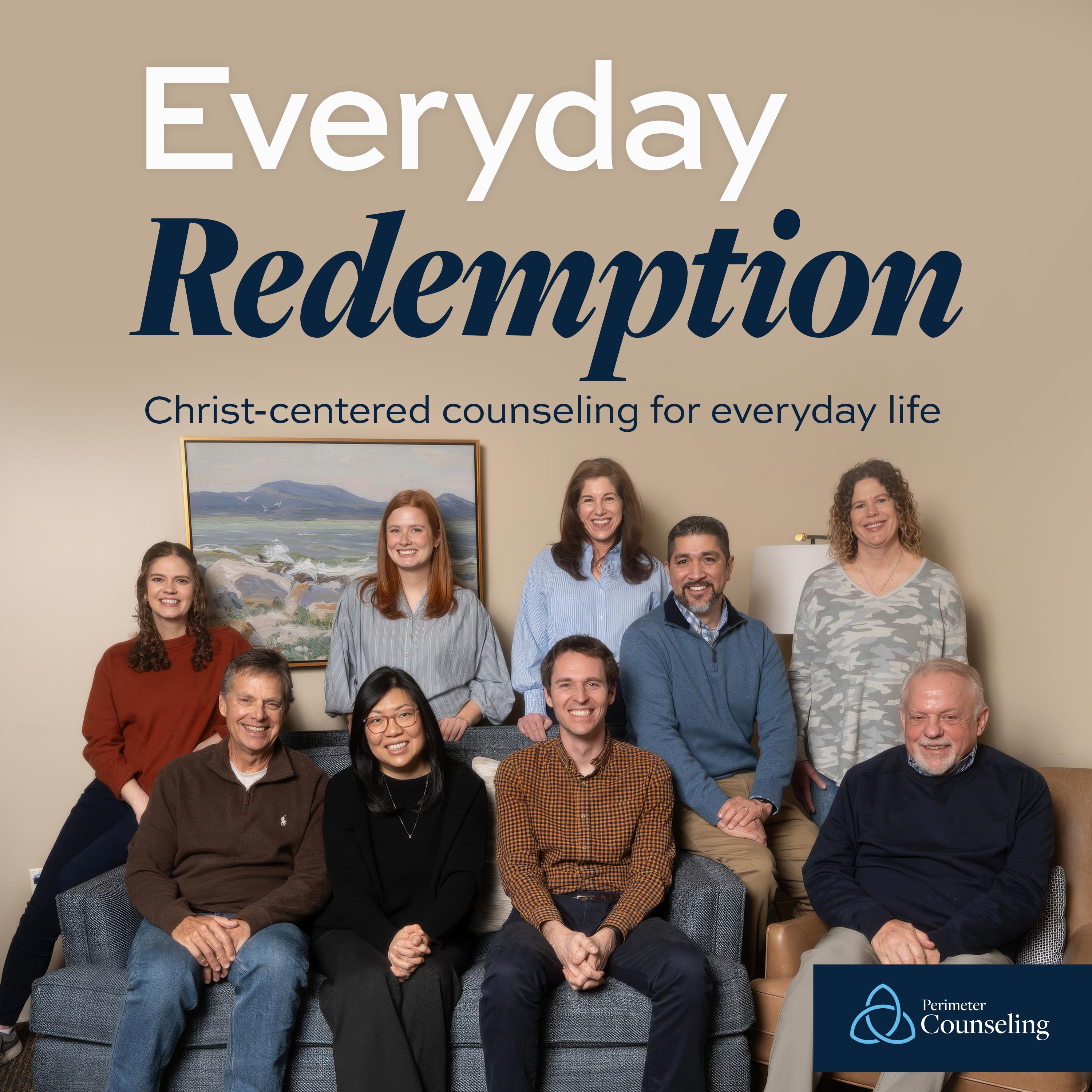
[00:00:05] Speaker B: Welcome to the Perimeter Counseling Podcast, a ministry of Perimeter Church. I'm your host, Caleb Martin. Perimeter Counseling center is a Christ centered, clinically informed group of counselors who are passionate about offering redemptive, holistic and practical principles to guide you through life's challenges. Thanks for joining us today.
All right, today we are here with two counselors. Got Karen Beniter and Kathy Chang, along with yours truly, Caleb Martin.
And Karen, why don't you introduce yourself a little bit? Kind of where you went to school, kind of how you got to Perimeter. There's a fun fact you want to tell anybody about. Go for it. Sure.
[00:00:49] Speaker A: So I went to Louisiana State University. I first felt the call to go into counseling when I was in high school and. And got my degree and master's in counseling there. And then from there I worked in utilization review for about a year and a half. Worked in a couple psychiatric hospitals, a residential treatment center for youth. And then God gave me an opportunity to work as a Christian counselor in both Louisiana and Texas. I did both of those in private practice.
Interesting fact. After that, God called me very clearly to stop counseling, which surprised me because it was such a clear calling on my life. And. And he called me to homeschool my kids. So I've been doing that for 15 years. And then about a year ago, I was really just praying and discerning about what God's next steps for me was in my life. And he began to put that love of counseling, which I don't actually know if that love ever went away, but it kind of resurfaced and I just felt really called to go back into counseling. And so started talking to some people at the church and someone put me in touch with you. And little did I know at that time, yeah, God was going to be starting a counseling center here.
[00:01:51] Speaker B: So I still remember. Yeah, getting that email. That was awesome. And we're here now, and it's crazy, so it's great. Thanks for sharing that. So is it. Go Tigers. Lsu.
Yeah.
[00:02:04] Speaker A: And yellow jacket.
[00:02:05] Speaker B: And yellow jacket.
[00:02:06] Speaker C: Okay.
[00:02:06] Speaker B: I had to pull that out. There you go. Yeah. All right. Kathy, how about you?
[00:02:11] Speaker C: Yeah. So I did my undergrad at uva. I was a double major in psychology and French. Never thought I would be a counselor.
Started out pre med for a while, switched to education. So then I actually was a public school teacher. I taught ESL for a handful of years and then got involved in children's ministry at my church.
Realized after some time that I needed to know more about the Bible. Even though I had grown up in church. So my pastors actually guided me and said, go to seminary, do a degree in counseling. And I didn't know what that really was at the time, but I said, okay. And so I went to Westminster.
I did my M. Div. In Biblical counseling, which changed my life. Also met my husband there. So again, changed my life. And then I didn't think that I was going to get a chance to do counseling in the church context, but went back to teaching public school, taught French for a handful of years.
And then I was doing children's ministry at our church in California when the pandemic hit and people's stuff came out and spilled out all over the place. And our church realized that we needed more resources.
So the elders approached me, asked me to start a biblical counseling ministry for our church, which I got to start up starting in about 2021.
And then just as we were towards the tail end of training and putting in new lay counselors, my husband got a call to a job here in Atlanta. And so we are. We moved here just this past summer before we moved by Providence.
I got in touch with Caleb, and we started having conversations, and we felt like this was going to be a good place for me to be able to come and to serve. So that's how that happened. So really thankful to be here.
[00:04:04] Speaker B: I remember Kathy sending a prospectus of her counseling organization and ministry, her church. And I was like, wow, this is like, the language is so similar to what we're doing here, but also it looked way better than what I had proposed.
So, like, I had a word document, like two pager. I think this is what we should do. And Cathy, I was like, maybe we need to put Kathy's.
You know, that's hard.
So anyway, I was like, okay, I think I'm getting a great asset here. And we have been blessed by both of you guys. So, real quick, I grew up in the North Georgia area, came to Christ through Campus Outreach, which was Campus Outreach Atlanta, Ministry of Perimeter, and been through various ministries. So was on staff with Campus Outreach, did a little time in shepherding, did men's discipleship and Life on Life, and then along that way went to rts, Reformed Theological Seminary, Atlanta and Charlotte for counseling. So now I'm here, and we're doing a counseling center and we're doing a podcast. So it's happening. So.
Well, let me ask. You know, we have people from all walks of life coming into the counseling room, right? And so we want to try to. We're sitting with someone, tell them, hey, what counseling is some people don't, they've never been to counseling. And then there's also what we are doing in counseling and why we're distinct. So maybe if somebody's coming to the counseling room for the first time, what are you saying to them about what counseling is and kind of what we do here and what you offer?
[00:05:45] Speaker C: Well, I mean, I think if I could even take a step back from what we offer, talking about counseling broadly in the broadest sense. Counseling is something I think that all of us do as believers. We are always counseling one another. We're speaking truth into one another's lives.
Hopefully it's biblical, it's coming from scripture, but it can be from whatever we are drawing from.
So we are all counseling one another in various ways. And then I think there are kind of layers to counseling. So that can look like a friendship, it can look like discipleship. And then we get to what we do, which is the formal counseling setting.
So I don't want people to feel like, oh, counseling is just something reserved for other people. But I want us all to be thoughtful about what that looks like, to walk alongside people in our lives through whatever situations they're going through. So that being the case, when people come and sit down with me for the first time, I do like to ask them kind of what their thoughts are on counseling. So some people have, they come in having their own previous experiences, having gone to different types of counselors.
And so one of the things that I like to draw out is that what we do at Perimeter is biblical counseling, which we're going to get into a little bit. But one of the things that I like to point out is that in other types of counseling that they may have experienced, the emphasis might be different. Or our understanding of who human beings are and how we function and how we process emotions and how we face challenges in life might look different from what we do in our room.
So one way that I kind of put that into a nutshell for people is in other types of counseling, there may be an emphasis on the things that ail us or the things that trouble us, coming from outside us, whether it is traumatic events or just kind of life circumstances.
And that that is where the source of trouble is. And then the help that we need comes from within, which is either self actualizing or changing our cognitions or changing our behaviors, and that that is how we achieve health and well being.
Whereas what I think our emphasis is and should be in biblical counseling is that a lot of times the difficulties that we face arise from within us that it's not just about the things that come at us which are significant. And they are. They do have impact, for sure. But a lot of times the things that are difficult is how we are moving through those. We bring to the difficulties, how we process and interpret all of those difficulties, and sometimes even sinful responses to some of those things in our lives that need to be addressed. So many times the difficulty comes from within and the help, as a believer comes from outside of us in the person of Christ. Well, he indwells the Spirit indwells. So. But it comes from a person that is not us. It comes in the person of the Holy Spirit. So that's one of the things that I talk about the. That first time that people sit down in the room with me. I don't know if you have other ways that you approach it.
[00:08:45] Speaker A: Yeah. And also just to let them know that there is a difference between the type of work we do versus someone who might be a Christian, who is a licensed professional counselor. Because there are some things that they provide that we can't.
One thing would be that they can provide diagnoses, and we don't do that in this setting. So I always try to make that clear to people that there is a differentiation. Another thing is the issue of authority.
So a licensed counselor would be under the state of Georgia, whereas we're under the authority of the church. And so I just want to make that differentiation with people when they come in.
[00:09:16] Speaker B: Absolutely. Yeah. One of the things that I say is kind of using.
If you think about your native tongue and maybe a second language. Cathy's a French teacher in the past, and maybe she'll start speaking in French.
[00:09:31] Speaker A: But I forget that about you, Kathy.
[00:09:33] Speaker B: So when you think about speaking in French, it takes a little effort. Right. And it's a little different than maybe your native tongue.
[00:09:41] Speaker C: Yeah, that's a great.
[00:09:43] Speaker B: So when we talk about, as Christians, we want to offer counseling kind of with our native tongue being the scriptures and Christ being both at the forefront and also the goal. The goal is heart change that's lasting, but it's God glorifying heart change. Right. And just that little tweak to say it's God glorifying heart change, I think is a very important distinctive. So that's our primary language is scripture, biblical worldview understanding, and then secondary language. Thinking about that illustration, I'm putting on that other hat. I am looking at God's world and how other people, even non Christians, have observed the human person.
So they.
You can study people in Various aspects. And psychology has studied people very intensely. And so we can gain some of those insights. Right. As kind of a secondary language and say, hey, this might be a helpful tool to use in the counseling room to supplement our heart change Biblically. That's kind of how I think about it.
[00:10:46] Speaker C: Yeah, I think that's a great point. I like what you said about the goal being God, glorifying heart change. And I think that's another thing that I try to impress upon the people that sit with me, is that if you go to a different type of counselor or therapist, the goal might be alleviating symptoms or feeling better or developing coping mechanisms.
But what I like to point out is that sometimes our circumstances may not get better.
Exactly.
Having that goal of how do I move through this faithfully with the goal of glorifying God and experiencing change in my own life, is really important in what we do. So I love that you pointed that out.
[00:11:28] Speaker B: Yeah.
[00:11:29] Speaker A: Yeah. And I like the way you say that, because I think that empowers people. When they're really hurting someone who might be going through a really hard divorce or having a significant loss in their life, there's really not a lot you can do to make them feel better. But for them to know that God sees them in their pain, that he's with them, for us to sit with them in that and to help them to see a path forward and know that it's okay that they're struggling, it's okay if they hurt. Maybe some people might hurt their whole life with. With a significant loss, and that that's okay. But for them to be able to see that Christ is there with them through that is really, really helpful for most people.
[00:12:04] Speaker B: Yeah, absolutely. Yes. Makes me think of Psalm 23:4 that do not fear, because he doesn't always. And that psalm, he's not talking about pulling him out of the shadow of death. He's talking about coming with him in the shadow valley. And so that's a part of a lot of what my counseling is, is showing how Christ is with you in whatever you're dealing with. And certainly, just like Jesus focused on deed, he also. Or word and deed, you know, there was a balance. He wasn't just preaching the word, he was healing. Are there things that we can help? We want to help alleviate suffering. If we can't, are there tools we can use? But. But with that ultimate goal being, you know, with Christ, union with Christ.
So if you were talking to a friend, how would you maybe speak to them about if they needed counseling? You Know you. Kathy talked about the different layers. You could talk about like a continuum of care, of friendship and discipleship and counseling. And maybe what we're doing is more of a intensely focused care, right?
When might somebody be ready for the intensely focused care that we call counseling?
[00:13:21] Speaker A: I think that from what I can see that most people who come into counseling, they're coming here because they've utilized all their resources, they've talked to their spouse, they've talked to their parents, their friends, their siblings friends, and somehow they're just still stuck and they're in a lot of pain.
And so one of the things that I love about the counseling relationship is that it's different from another type of relationship in that one thing that makes it uniquely different is that it's one sided. So that when I sit down with somebody who's coming in for counseling, we can just focus on them. Because isn't it true that when we are talking to a friend or even a discipleship group leader and we're sharing our struggles, we kind of feel a little bit bad after a time and we feel like we need to balance that relationship out.
So with the counseling relationship, we can just come in and just focus on them and they can just go deep with us.
Another thing that's a little bit different that I appreciate is that I don't know about you guys, but sometimes when I'm talking to a friend or one of my sisters and they're struggling, sometimes I don't feel like I can go as far as I want to go with them because I don't want to hurt their feelings or say anything that's kind of painful to them. And so within the counseling relationship, though, people expect me to do that. They basically come in and I mean, I don't know about you, but I have people say, please just tell me what you see.
If there's toxic behaviors that I'm doing, you know, you can see that, let me know. So they invite us to speak into those places and to go deep. So I think that that to me would be an indicator that someone might be in a place where they can go into a relationship that's different than the other ones, that they have to get counseling at a different level.
[00:15:00] Speaker C: I think you made some really great points there. From the counselor side.
What we see and how we can relate to the counselors, and I think those are good indicators, like you mentioned, for when people might be ready for counseling is when they're ready to come and hear the hard things or to do the hard work. And I think that's one thing that I would like for people to recognize, I think, asking themselves, am I ready for counseling? A lot of times it is because I've exhausted my resources, and that's really a great time to come. It is also helpful for you to be able to sit back and say, okay, I'm ready to sit and do this work and to consider what I'm going through and to process that and to put in the effort that it requires to grow and to move forward and to walk faithfully through this situation. So that's one thing that I think is when you're ready to really come and to share that with someone, to have someone guide you through it, to do the work.
I think another aspect of when people might want to consider counseling is if there is a very particular, a significant difficulty in your life, that's kind of a focused difficulty that a counselor can walk with you through specifically.
So if there is something that's been kind of ongoing, that's been long term, or that is just of a greater degree of intensity than what you might normally experience, I think that's also a great time to come and to ask for help. And I would encourage people to do that, maybe even sooner rather than later, because as we know, things can progress and get worse over time. So I'm thinking specifically of people in maybe difficult marriages or things like that, where I would say, come and let's talk about what's happening now rather than five years from now.
[00:16:49] Speaker B: Absolutely. Yeah. Sooner is always better, right?
Well, if you're listening to this and you're in the Atlanta area, we certainly want to be a resource for you.
If you're outside the Atlanta area, we want to be a resource as well. We can point you to other good counselors. And even if you're in the area, maybe we're full, we still have good counselors in the area we can refer to, that we have relationships with. So. So don't let that be just. If you're questioning, if you're feeling like you should, please reach out. We really want to do that.
Well, that concludes our, I think, first conversation, and we look forward to speaking with you next time. And thanks for being with us.